

ROMAN ROAD
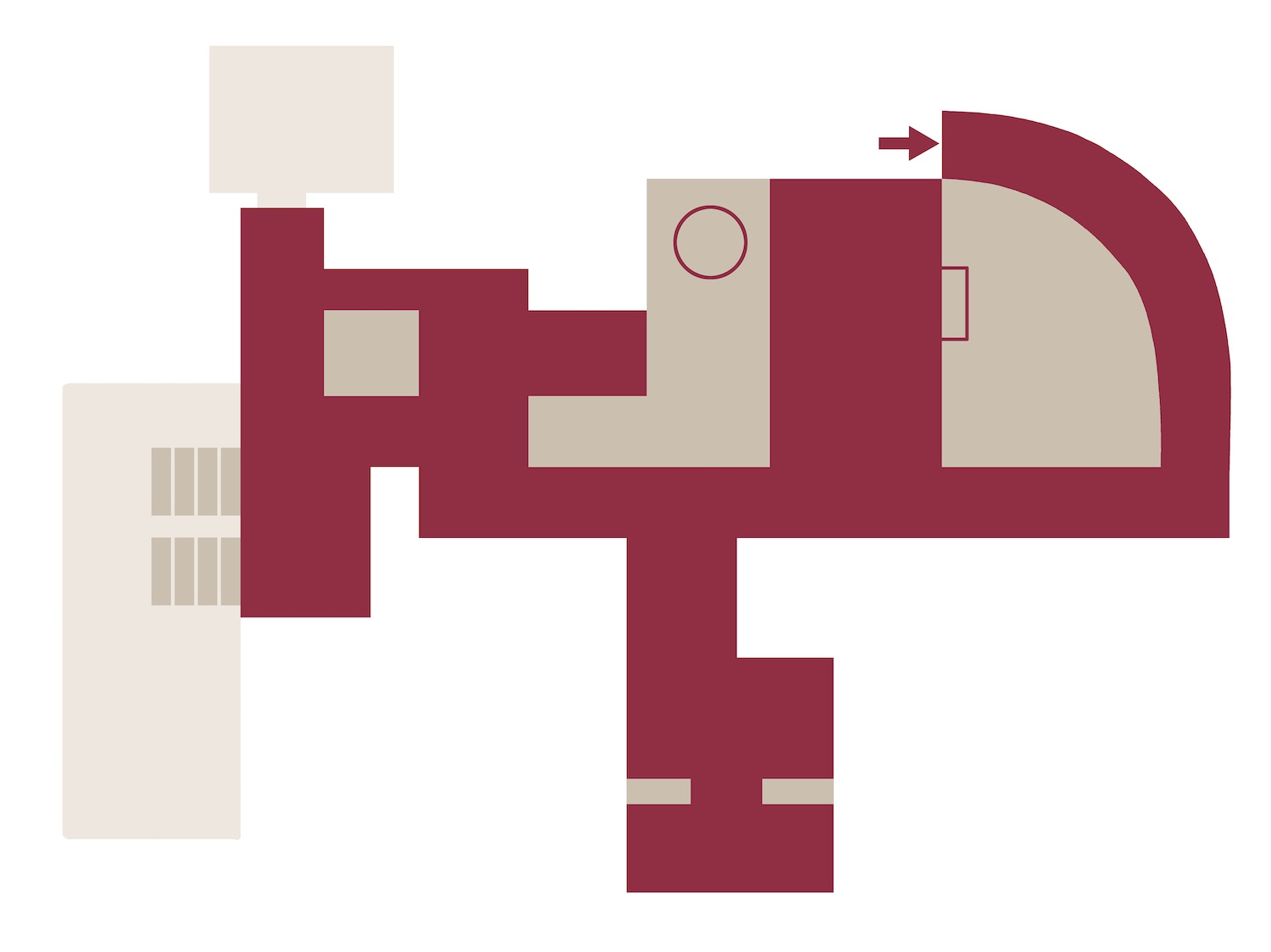
The Roman road was made from layers of compacted river gravel mixed with sand and lime mortar, similar to today’s tarmac roads. Almost 8 metres wide, it was bordered on both sides by a pavement made from compacted clay and sand, with a gutter for rainwater.
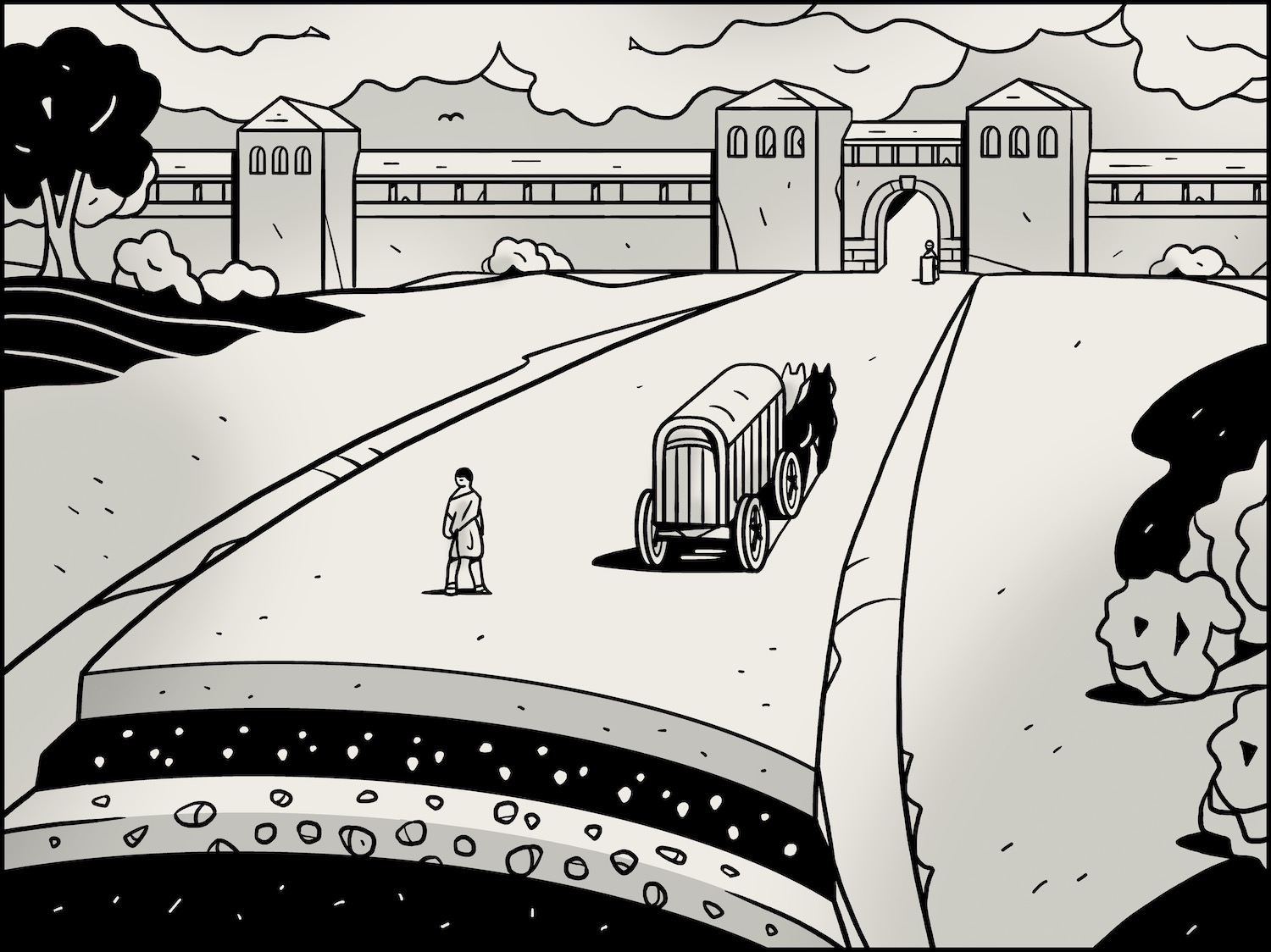
Roman road. Image: David Krančan/MGML
The main Roman road connected the colony of Emona with the port on the Ljubljanica River. It then crossed a bridge and continued to other Roman towns in the direction of today’s region of Dolenjska, and from there on to Siscia (Siscus). It remained in use until the 15th century.
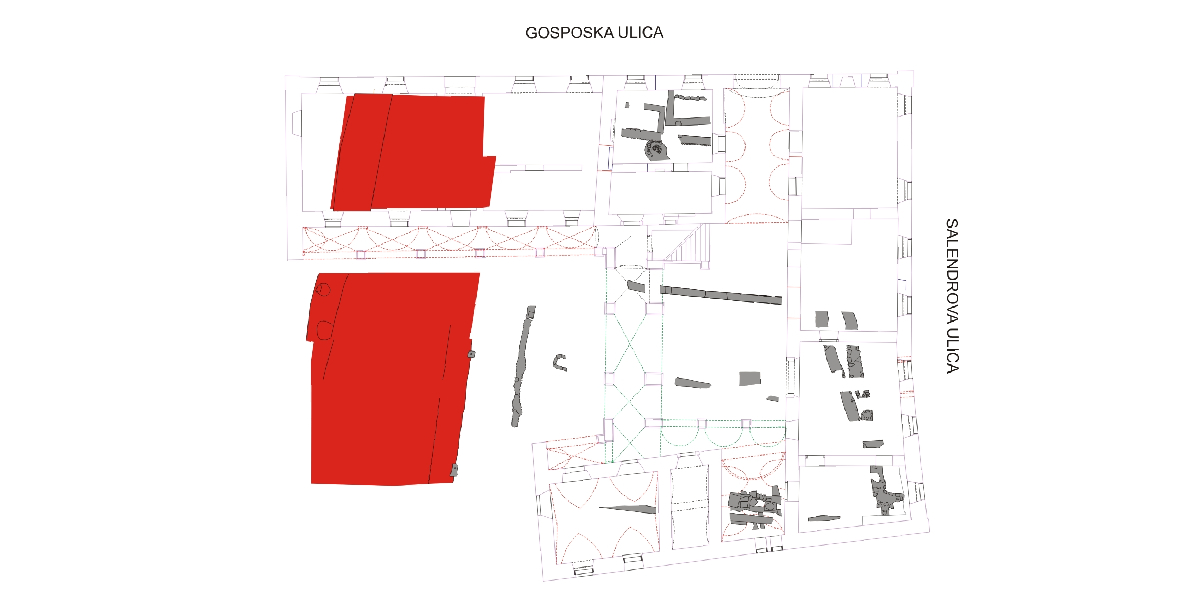
Excavated section of the Roman road near the Auersperg Palace. Image: Martin Horvat/MGML
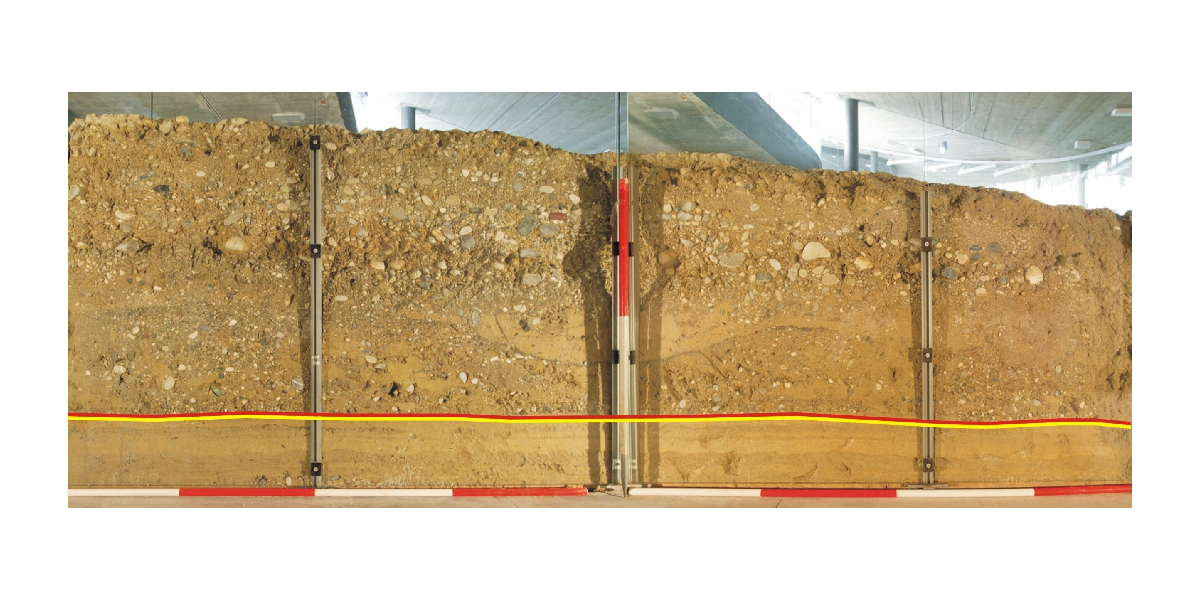
A road in cross-section. The layers from the Roman period begin at the red line; layers below the yellow line are prehistoric. Image: Martin Horvat/MGML
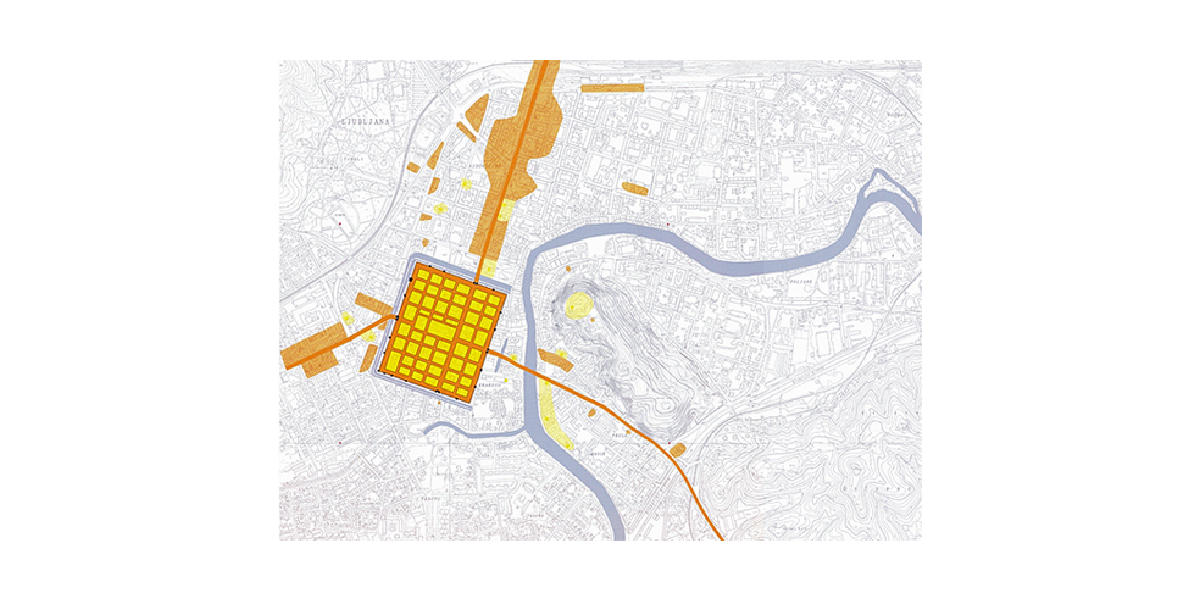
Emona with its three approach roads. The road uncovered in the basement of the Ljubljana City Museum formed part of the eastern approach road (on the right). By: Martin Horvat/MGML.
Excavated section of the Roman road near the Auersperg Palace. Image: Martin Horvat/MGML
A road in cross-section. The layers from the Roman period begin at the red line; layers below the yellow line are prehistoric. Image: Martin Horvat/MGML
Emona with its three approach roads. The road uncovered in the basement of the Ljubljana City Museum formed part of the eastern approach road (on the right). By: Martin Horvat/MGML.
Have you ever wondered how long it took the Romans to get around? Their chariots could go about 8 km per hour.
TAKE A QUIZ
1 / 5
The Roman road in front of you was paved
False! Most major Roman roads were paved, but not all of them were. The one in front of you was not.
1 / 5
The Roman road in front of you was paved
False! Most major Roman roads were paved, but not all of them were. The one in front of you was not.
1 / 5
The Roman road in front of you was paved
False! Most major Roman roads were paved, but not all of them were. The one in front of you was not.
2 / 5
This Roman road was nearly 8 metres wide
True! This road was a real motorway by the standards of the time. But it narrowed considerably when it entered Emona through its eastern gate.
2 / 5
This Roman road was nearly 8 metres wide
True! This road was a real motorway by the standards of the time. But it narrowed considerably when it entered Emona through its eastern gate.
2 / 5
This Roman road was nearly 8 metres wide
True! This road was a real motorway by the standards of the time. But it narrowed considerably when it entered Emona through its eastern gate.
3 / 5
The Roman road in front of you was once completely level
False! The road sloped slightly at the sides, allowing rainwater to run off into the drains.
3 / 5
The Roman road in front of you was once completely level
False! The road sloped slightly at the sides, allowing rainwater to run off into the drains.
3 / 5
The Roman road in front of you was once completely level
False! The road sloped slightly at the sides, allowing rainwater to run off into the drains.
4 / 5
Roman roads were built by the army
True! The Roman army was involved in the construction of roads, bridges and similar infrastructure. Detailed plans were made by expert military surveyors.
4 / 5
Roman roads were built by the army
True! The Roman army was involved in the construction of roads, bridges and similar infrastructure. Detailed plans were made by expert military surveyors.
4 / 5
Roman roads were built by the army
True! The Roman army was involved in the construction of roads, bridges and similar infrastructure. Detailed plans were made by expert military surveyors.
5 / 5
Major roads to Roman cities were lined by cemeteries
True! The Romans buried their dead along the roads leading to cities, though outside the city walls.
5 / 5
Major roads to Roman cities were lined by cemeteries
True! The Romans buried their dead along the roads leading to cities, though outside the city walls.
5 / 5
Major roads to Roman cities were lined by cemeteries
True! The Romans buried their dead along the roads leading to cities, though outside the city walls.
THE END!
Last description